FACTOR
01 / LINE
01 / LINE
ARCHIVE / L-12
The decision travels through the spine.
A clean directional pull lets the viewer find the figure’s intention before they notice any detail.
Jovareqini Motion Index collects the small decisions that give a character a physical point of view: a tilted ribcage, a delayed hand, a pause held just long enough.
This is a public notebook, not a production reel. The entries are designed to be handled slowly.
Choose a motion factor. Each reading points to a different place in the same archive entry, because a clear pose is rarely a single, fixed answer.
A clean directional pull lets the viewer find the figure’s intention before they notice any detail.
Not rules. More like things to listen for when a drawn body needs to feel specific rather than merely busy.
Which direction has the most pressure, and where does it quietly change its mind?
TRACEWhat touches first? A convincing load arrives before a pose explains itself.
ANCHORWhat keeps moving after the decision is made, and what can finally go still?
ECHOThey allow one part to disagree with another. A shoulder can hesitate while the head commits; a wrist can arrive late and make a whole gesture feel lived in.
Act the beat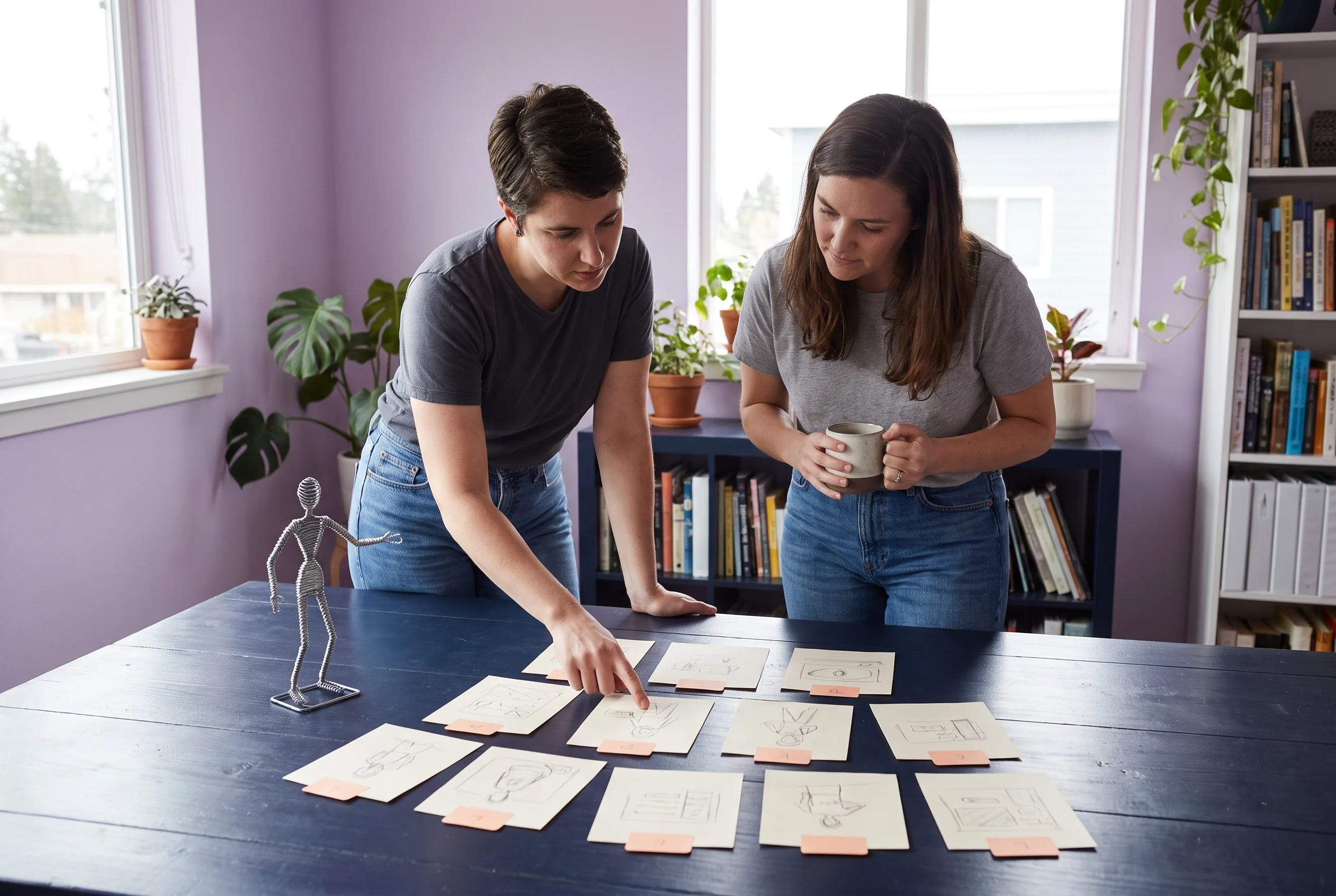
HINGE WALL / Keep the joints visible long enough to learn what they change.
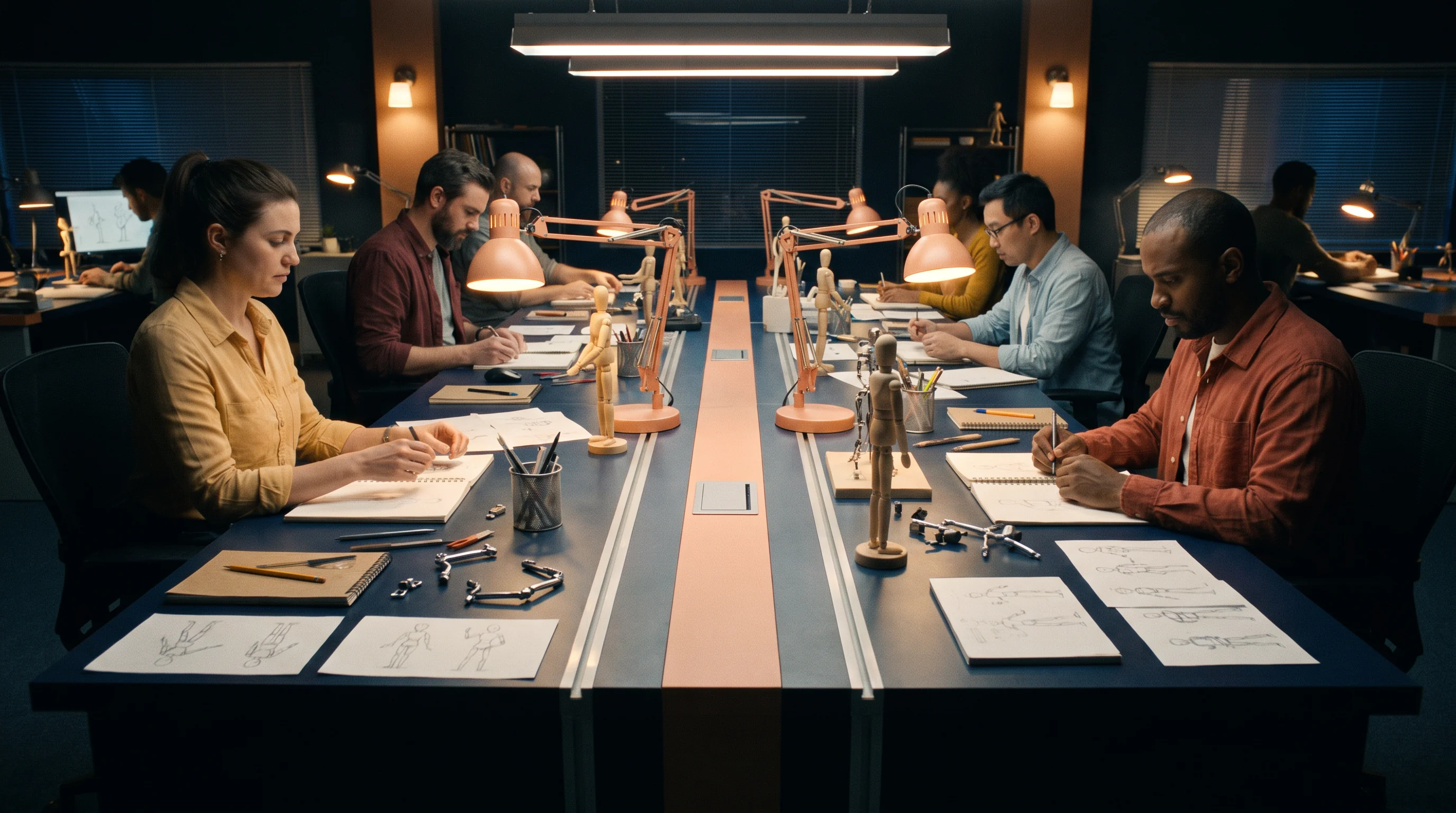
Before refining a drawing, act the moment with whatever is nearby: a chair, a sleeve, a cup, the edge of the table. The body finds an order that the plan did not know it needed.
These studies are intentionally staggered. Motion does not arrive in evenly spaced boxes, and neither does an attentive working day.
Begin the action with the attention leaving before the shoulders follow.
withdrawMake the object’s imagined mass write itself into the elbow.
transferHold the breath at the lips; let the answer choose not to arrive.
suspendGive the hand a job slightly before the body knows the route.
searchAllow the clothing, fingers, or breath to finish the sentence.
releaseEach shelf holds a prompt, not a prescription. The point of a maquette is its stubborn physicality: it asks a pose to survive gravity, touch, and a change of angle.
Bring a movement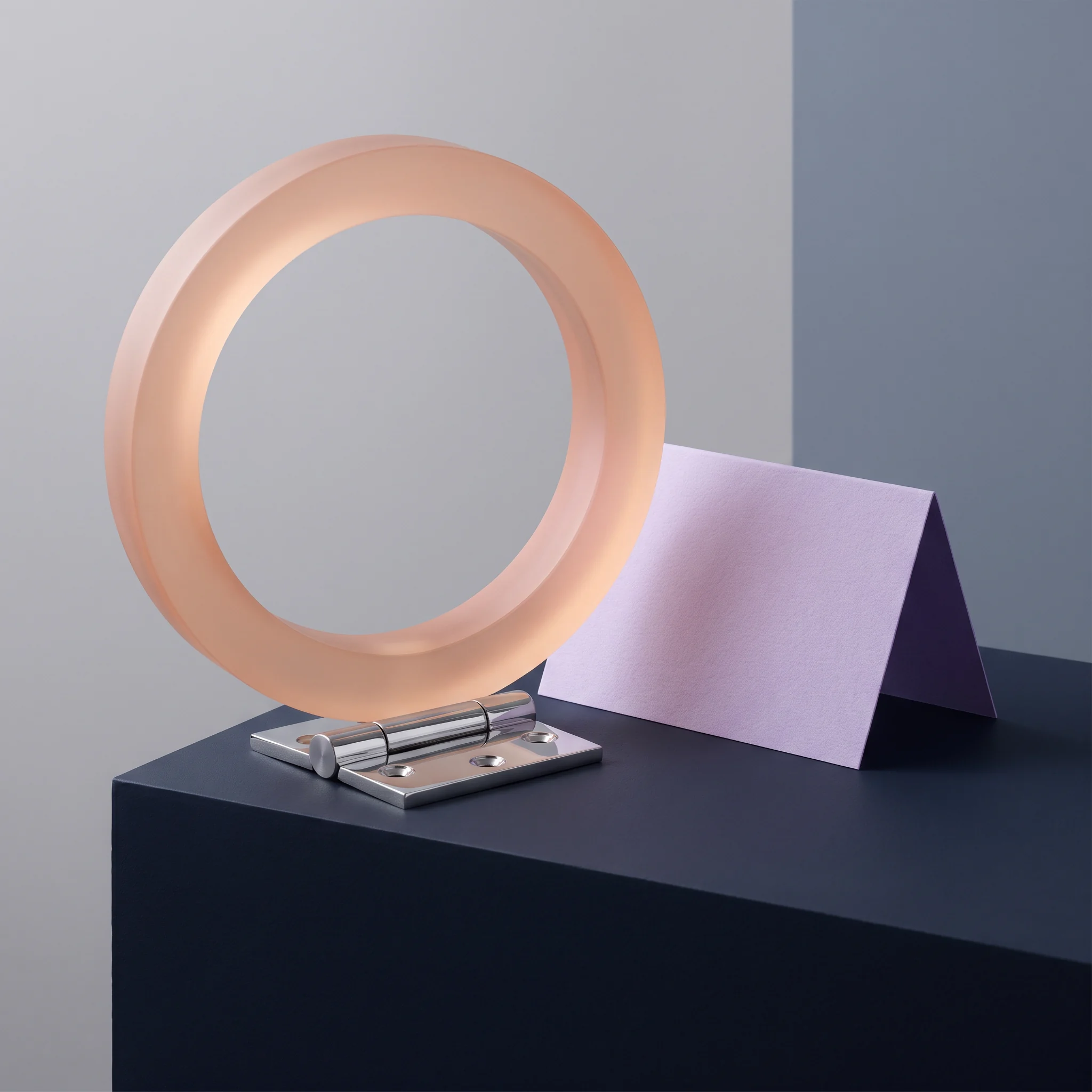
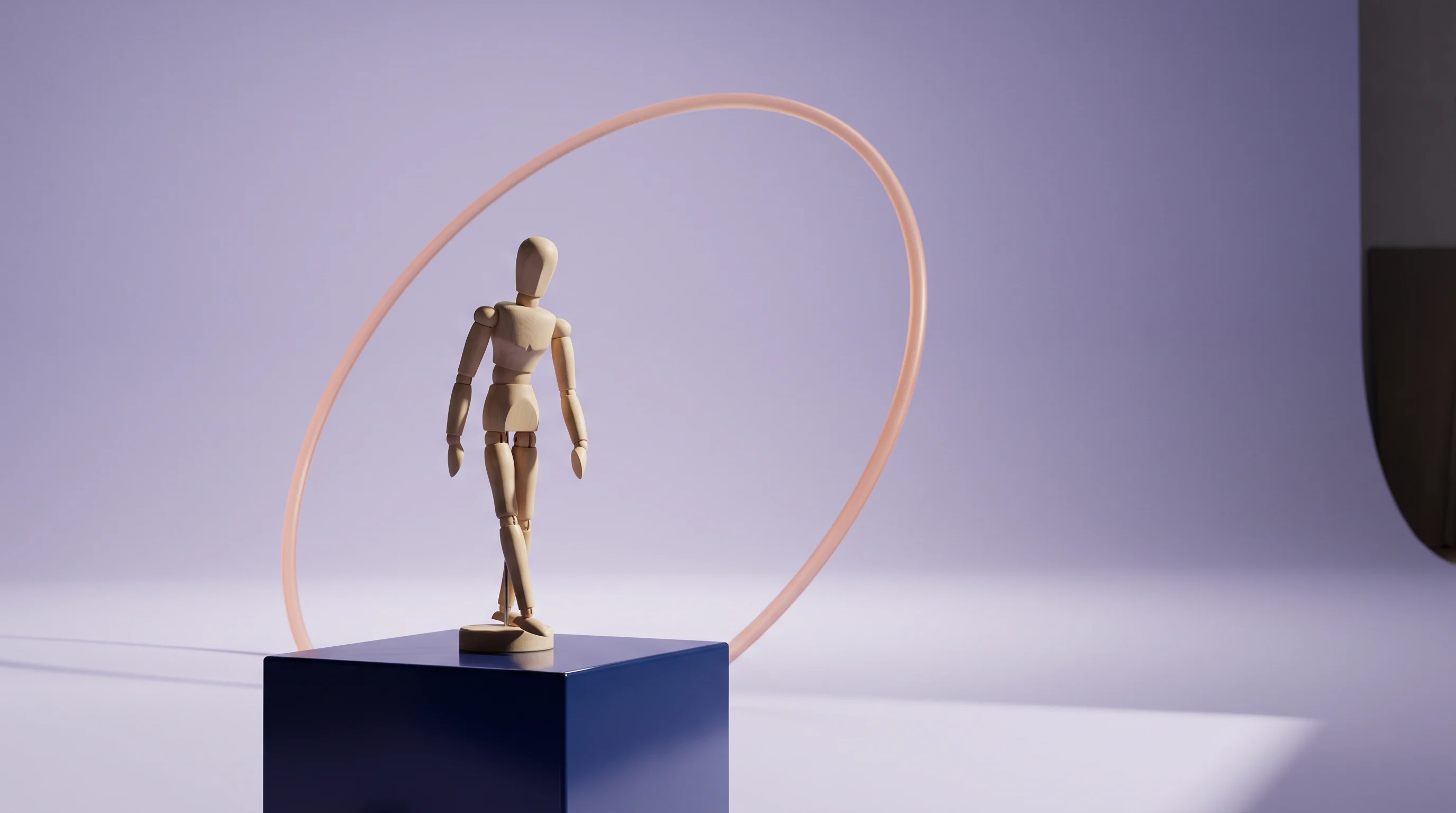
A single open loop can suggest a pathway, a boundary, or the afterimage of a turn.
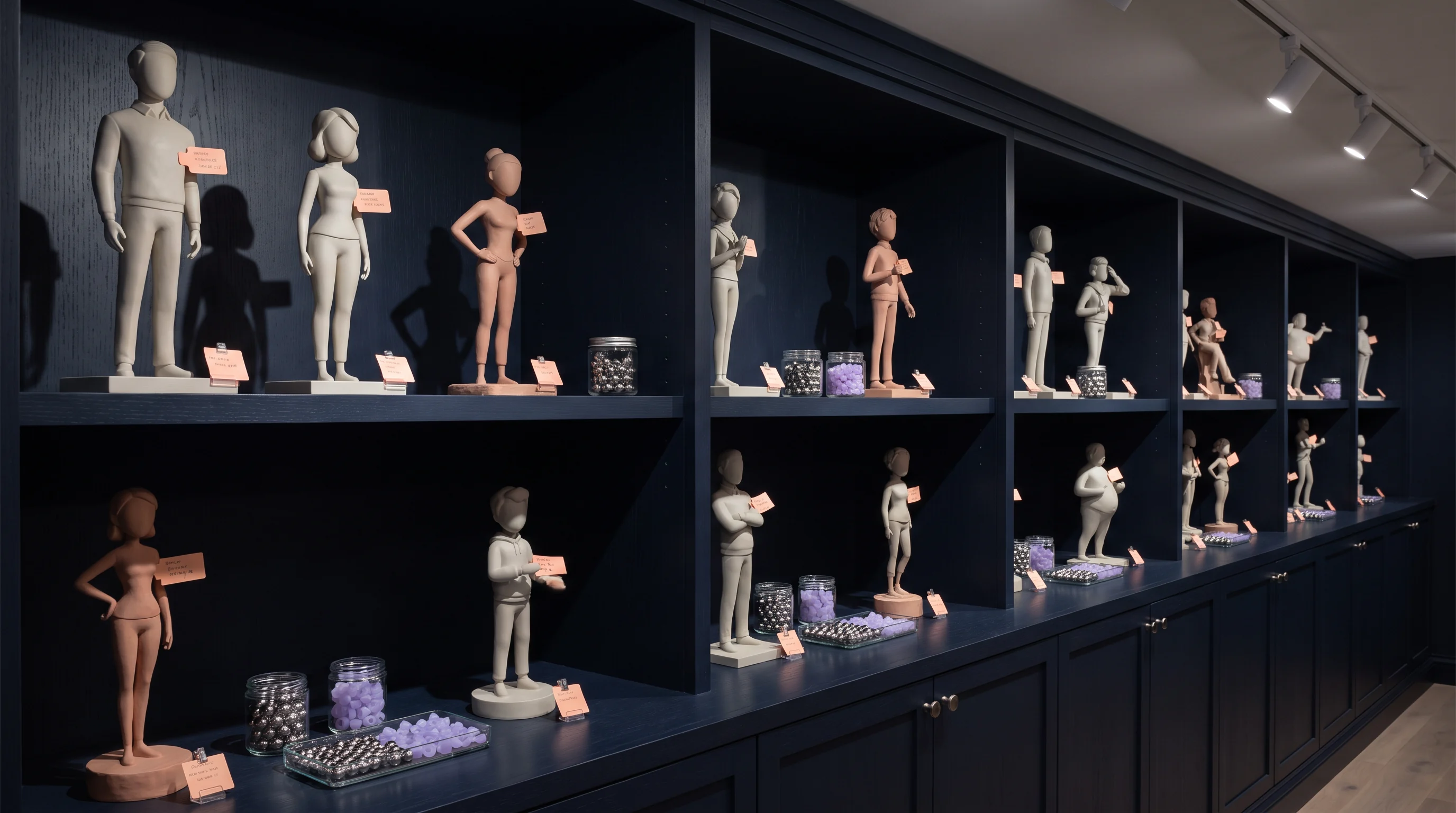
Set related poses together so scale, temperature, and intention have something to push against.
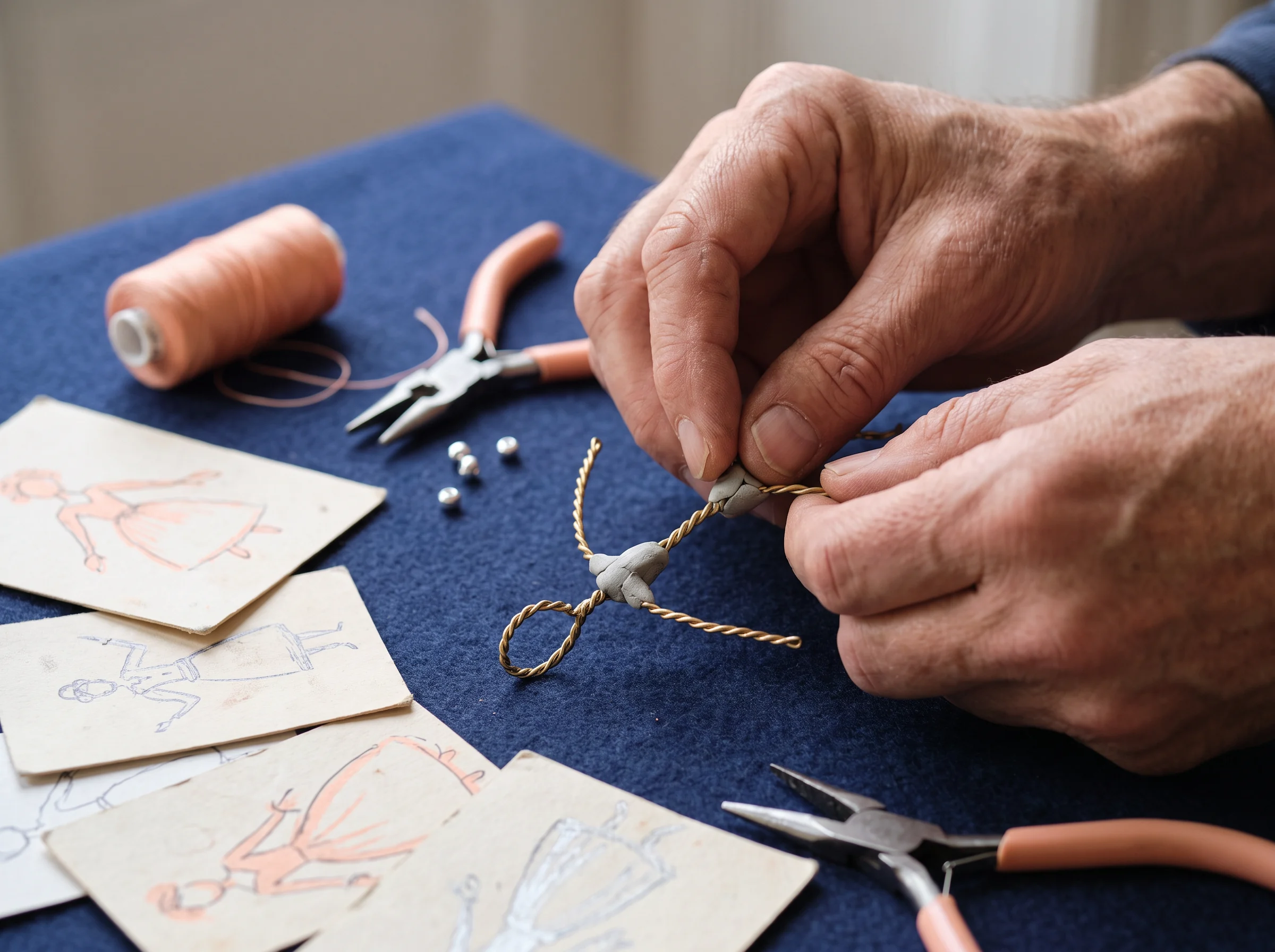
A visible repair can be a useful reminder: the axis of a gesture is often less tidy than expected.
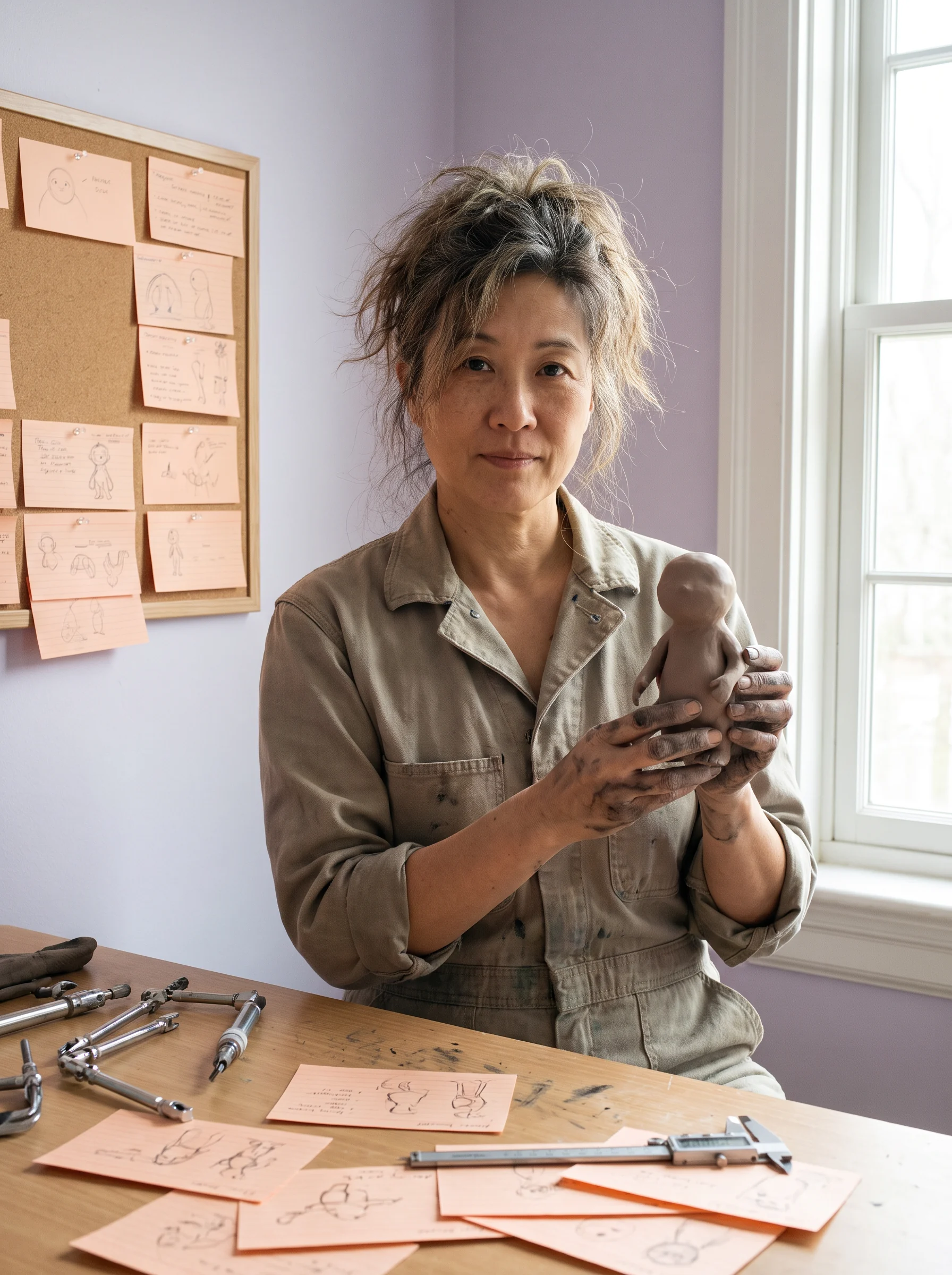
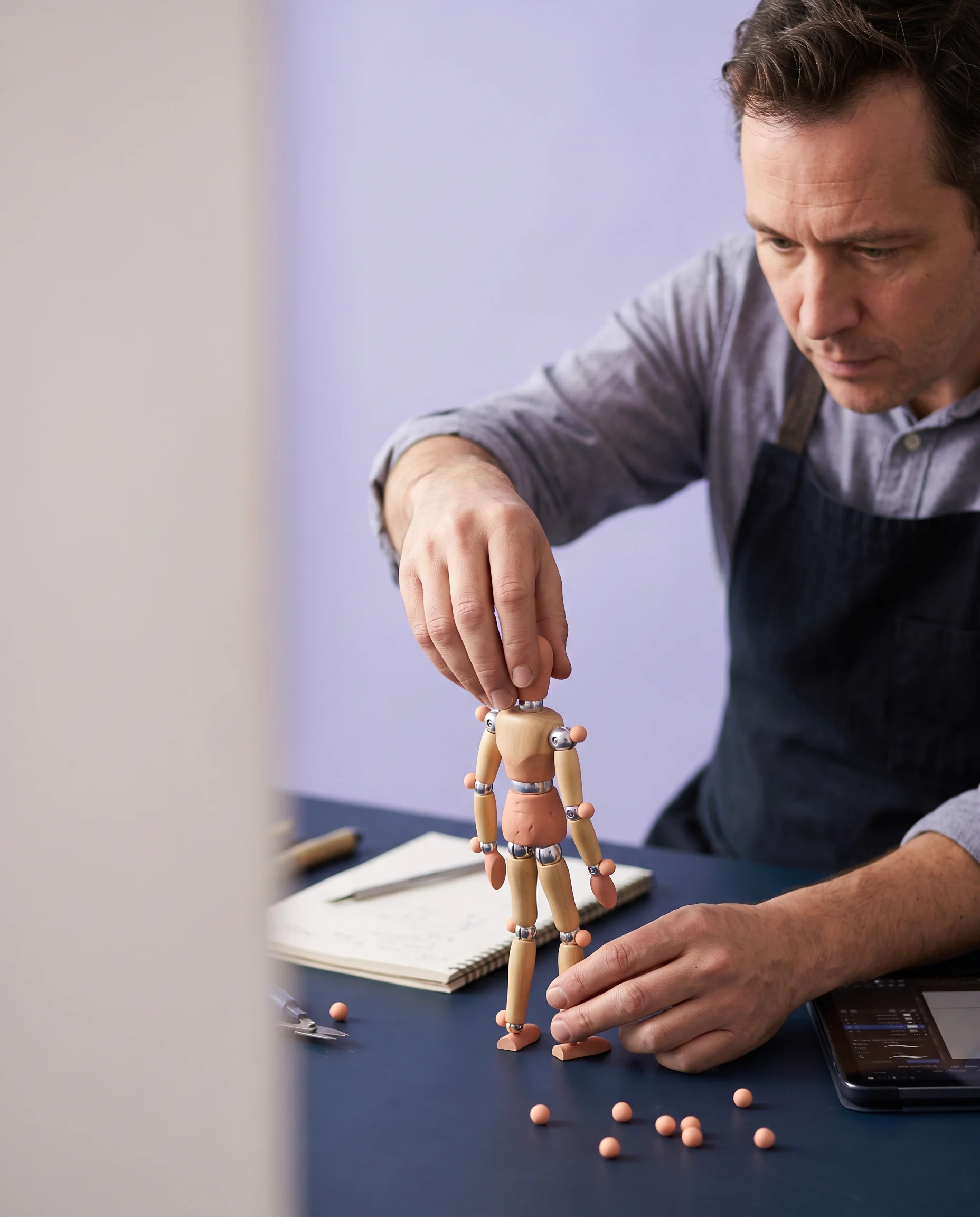
Put the figure back in a hand. The scale of attention changes what a pose is willing to reveal.
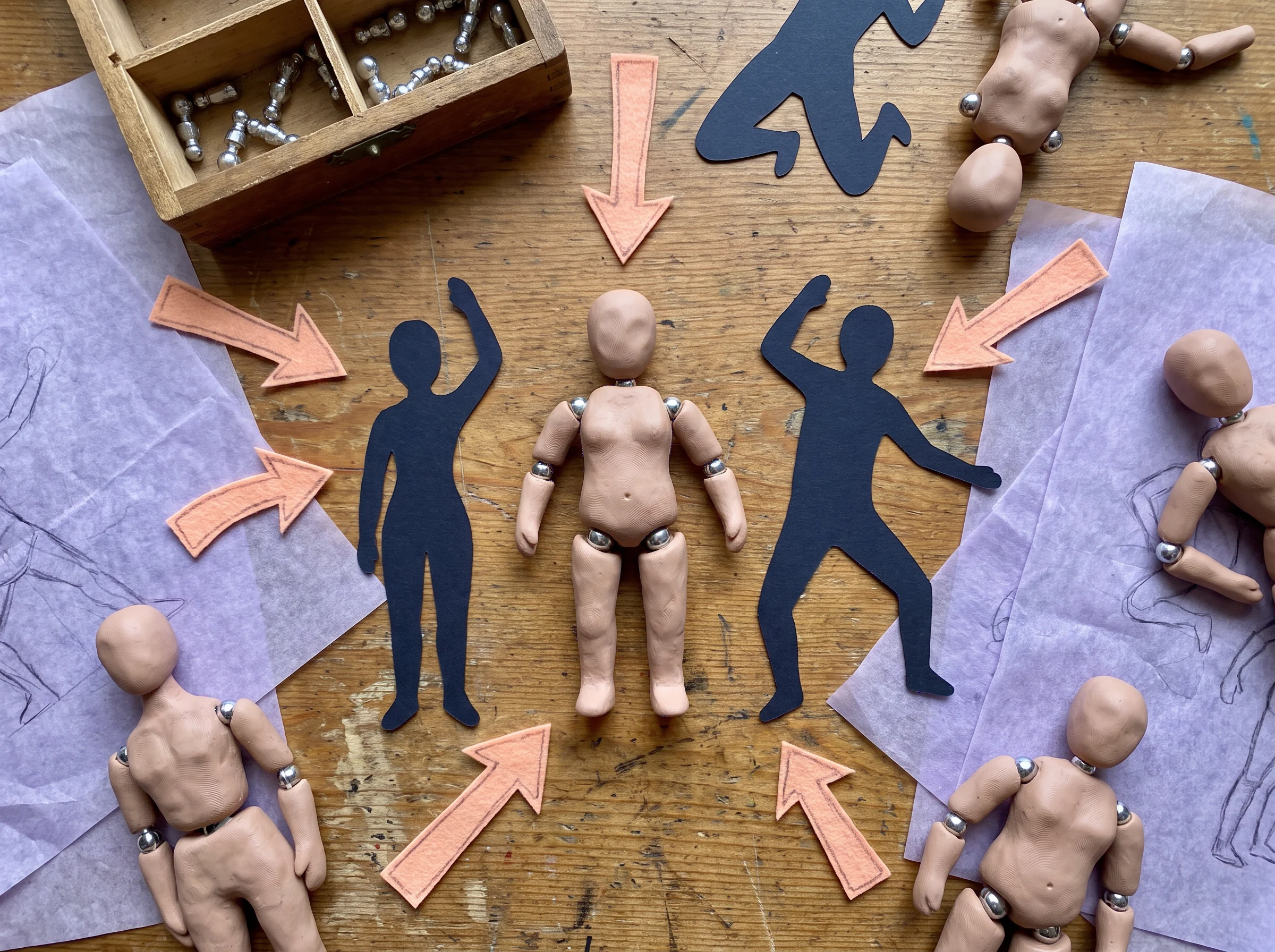
Need a nudge for a study? Pull a note from the dispenser. It is deliberately small enough to test in a page of thumbnails, a mirror, or a few minutes of observation.
“Where does the decision arrive a beat before the rest of the body?”
When a character moves with an internal reason, the work becomes easier to read and harder to forget. Keep looking for the hinge, the delay, and the small brave choice of weight.
Four answers for visitors using the index as a companion to their own motion studies.
It is for animators, illustrators, performers, students, and observant people who want a more physical way to think about a character. You do not need a finished project or specialist tools. A few thumbnails, a mirror, a scrap of wire, or a quiet five-minute observation can be enough to use an entry well.
Choose one entry and make a short, imperfect response instead of trying to copy its appearance. Change the character, situation, and scale, then preserve only the motion question. If the note is about a delayed hand, test that delay in three rough versions. Compare what becomes clearer, stranger, or more honest when you simplify the rest.
Yes. The contact form is for movement questions, references you are noticing, and suggestions for future notes. Describe the situation in plain language rather than asking for a finished solution. It helps to mention what changes, where the body seems uncertain, and what you have already tried. The form runs only in your browser and does not submit material to a server.
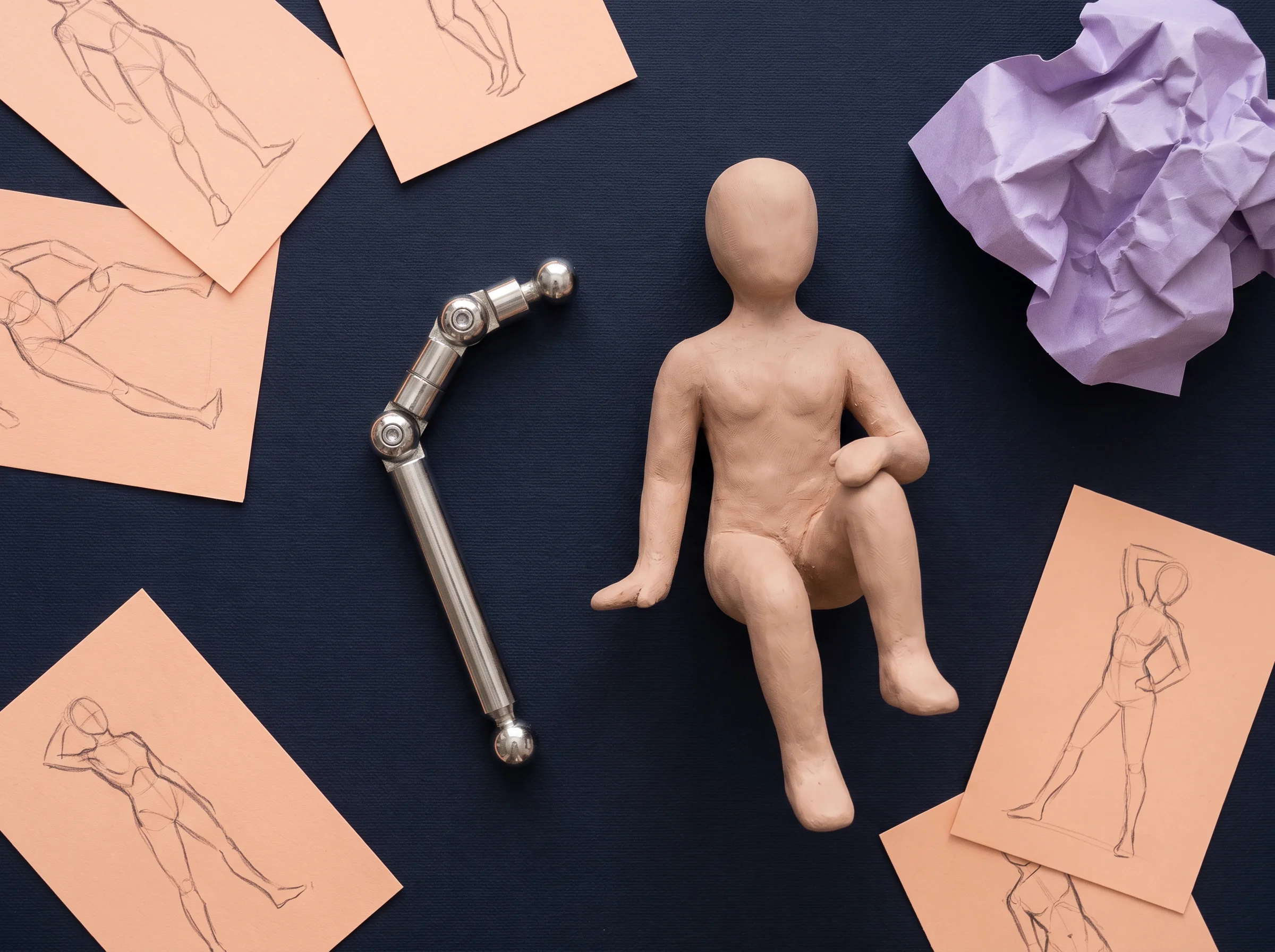
A maquette makes a drawing answer to space. It reveals whether a lean has an anchor, whether a turn has a route, and whether the silhouette changes when you move around it. The purpose is not realism or a perfect miniature. It is to let touch and gravity interrupt assumptions before those assumptions harden into a finished pose.
Tell us what you are watching, testing, or trying to untangle. This browser-only form gives you a local confirmation and clears the page; it does not transmit your message.
FOR GENERAL NOTES
[email protected]
PLEASE DO NOT INCLUDE PRIVATE, SENSITIVE, OR TIME-CRITICAL INFORMATION.